Last reviewed 2 September 2026
The federal battery discount is worth having. It should not decide the size of the battery on your wall.
Under the Australian Government Cheaper Home Batteries program, eligible homes and small businesses can get around 30% off the upfront cost of an eligible battery. The actual discount still depends on usable capacity, eligibility, STC value and the install date. The next scheduled STC factor change is January 2027. That government discount is not the same thing as a retailer special or a “limited time” package price.
At Expert Energy Tasmania we size solar batteries around how the house actually uses power — evenings, winter, whether you need backup — then apply the rebate. The other way around is how people end up with storage they barely use, or a battery that still leaves them buying grid power after dark.
Why the rebate alone is a bad sizing tool
A rebate is a contribution to the cost of hardware that meets the program rules. It does not know when you cook, when the heat pump runs, or whether the car gets plugged in at 6pm. Two houses with the same roof size can need very different storage because their evenings look different.
It is also easy to mix up the official program with marketing. Ask which line on the quote is the government discount (usable capacity, STC, install date) and which line is our price or a retailer offer. Around 30% describes eligible systems under the program. It is not a guarantee on every quote.
Start with usage, not the rebate ceiling
A bigger battery is not automatically a better one. If the solar array is small, or most of your load already happens in daylight, extra kilowatt-hours of storage can sit there doing little. If you cook, heat and charge a car after sunset, undersizing hurts more than missing a slightly larger rebate.
Tasmanian winters make this clearer. Shorter days mean less surplus to charge the battery. A design that looked generous in January can feel tight in July if evening heating and lighting are high. That is why we look at bills or interval data across seasons where we can, not a single sunny week.
What we walk through on a Tasmanian job
1. Day versus evening. Bills and interval data beat a guess. Daytime loads (hot water on a timer, work from home, pool pumps) often run straight off the panels. Evening peaks — cooking, heating, lighting, overnight EV charging — are what the battery is usually for. If almost everything already happens while the sun is up, more storage may do less work than the quote suggests.
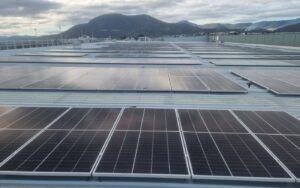
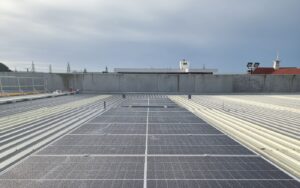
2. The solar you already have. A battery stores surplus. If the array is already covering the house through the day and exporting a lot, storage can shift some of that into the evening — if the inverter and switchboard allow it. If there is little left over, more panels may be the honest next step before more storage. Pairing a large battery with an undersized or poorly oriented array is a common mismatch.
3. What “backup” means for you. Fridge and a few lights is a different design to the whole house. Medical equipment, heating, or a home office each change the brief. Do not assume a standard hybrid system will island every circuit in an outage. Write down what you actually want to keep running, then we design for that.
4. Hybrid or off-grid. Grid-connected hybrids use the network as a backstop. Off-grid systems have to carry the property through Tasmanian winter without it — different rules, different generator conversation. Our Huon Valley off-grid project replaced an ageing system with 13kW of solar and 16kWh of BYD storage. That is a site-driven design, not a rebate brochure.
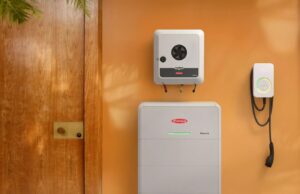
5. Roof and switchboard. Hardware only works if the site can take it. Remaining roof space, inverter type, spare ways on the board, cable routes and backup changeover all matter. If the battery will not fit, or the inverter cannot talk to it, the rebate does not matter. Site constraints belong in the first conversation.
6. Government discount versus the rest of the quote. Line up eligibility under the Cheaper Home Batteries program, the usable capacity used for STCs (not only the brochure headline), the assumed install date, and what happens if certificate values move. Then look at our price separately. That keeps the conversation honest.
What this is not promising
We will not invent a savings percentage or a payback year for your house from a web page. Feed-in credits, retail tariffs, heating fuel and household routines all change the arithmetic. The useful outcome of a review is a size and architecture that match your evening load, solar surplus, backup brief and site — with the rebate treated as a contribution to that design, not the design itself.
Book a bill-and-system review
Bring recent bills or an inverter app export, and a short list of what you want to keep running after dark. We will recommend a size from your usage, then talk rebate — not the other way around.
Contact Expert Energy Tasmania to request a bill-and-system review so the recommendation starts with your usage, not the rebate ceiling.