Last reviewed 6 September 2026
TasNetworks has moved the North West Transmission Developments (NWTD) into construction. Coverage around early September 2026 — including pv magazine Australia’s construction notice — describes Stage 1 as roughly 129 kilometres of new and upgraded transmission from the Cressy area through to Burnie via Sheffield, with associated substation and switching works.
That’s major grid infrastructure for the north-west and for Tasmania’s broader renewable build. It’s also the kind of project that sparks a simple household question: should I oversize my rooftop solar tomorrow because the wires are getting stronger?
Short answer: no — not automatically. Here’s a clearer way to think about it.
What NWTD is for
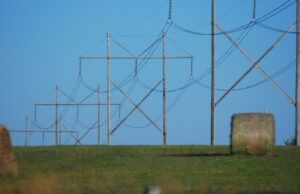
NWTD is a transmission upgrade. It strengthens the backbone that moves large amounts of power across the north-west, supports future renewable connections, and forms part of the wider Project Marinus / statewide network story. Construction notices and contractor updates put the build on a multi-year path — this isn’t a weekend LV tweak on your street.
For communities between the Midlands and the north-west coast, visible towers, traffic management, and local contractor activity will be the day-to-day reality. For rooftop owners, the relevance is indirect: a stronger regional transmission system supports hosting more large-scale renewables and firm transfer. It does not rewrite your home’s soft export limit overnight.
Think of NWTD as state-scale enabling works. It matters for where wind and large solar can connect and how energy moves between regions. Your inverter settings still answer to distribution rules on your NMI.
Grid strength ≠ “double my panels this week”
Household export limits and connection rules still sit with TasNetworks’ distribution requirements for micro embedded generation. A transmission project inland doesn’t flip every suburban LV transformer to unlimited export. Soft caps, local congestion, and case-by-case outcomes (including lower or zero export on constrained pockets) remain the rules that govern your inverter settings.
We’ve covered that territory in TasNetworks export limits explained. NWTD and export limits live at different layers of the network. Don’t let a transmission headline substitute for a proper connection assessment on your NMI.
If a salesperson says “the grid is getting stronger so we can put 20 kW on your single-phase roof with no export worry,” ask them to show the TasNetworks approval path for your connection — not a map of Stage 1 towers.
Transmission strength and your street are not the same job
Think of it as two layers. Transmission (220 kV class lines, substations at Palmerston / Sheffield / Burnie, switching at Heybridge in the broader Stage 1 picture) moves bulk power between regions. Distribution is the poles, transformers and service mains that actually reach your switchboard. You can upgrade the highway without widening every driveway.
That’s why a construction start on NWTD is good news for Tasmania’s ability to host large renewables and transfer energy — and still a poor reason to order an oversized residential array “while the grid is getting stronger.” If your street transformer is already busy at noon, that constraint is local. It gets assessed on your application, not on a statewide transmission program.
Construction itself will run for years. Landholders along the corridor will notice access tracks, tower works and traffic more than rooftop owners in town. None of that changes how we set an inverter export limit in Ulverstone or a hybrid in Penguin.
What north-west households should take from it
If you’re in Burnie, Devonport, Sheffield country, or along the corridor, the useful takeaways are more local than viral:
- Long-term regional energy infrastructure is advancing — that’s a confidence signal for living and investing in the north-west
- Your rooftop design still depends on roof, loads, phase count, and the approved export limit
- Batteries and load shifting still matter when midday surplus is capped
- Commercial sites with daytime process loads may benefit from solar sized to interval data, not to transmission news
Expert Energy Tasmania works statewide. North-west customers are welcome — we’re not a Hobart-only doorway brand. Whether you’re on a rural feeder or a town block, the design process starts with the site, not the press release.
A Devonport warehouse with weekday daytime loads is a different design problem to a Burnie home that empties out at 8 am. NWTD doesn’t collapse those differences. Interval habits and connection class still drive the proposal.
Regional proof without a doorway page
We don’t need a separate “NW landing page” to say we install across Tasmania. The same crew discipline that delivers residential hybrids in Greater Hobart and off-grid work in rural valleys applies when we’re quoting Ulverstone or Wynyard. For how we approach storage and panels generally, see solar batteries and solar panels in Tasmania.
If your property is truly remote or grid-unreliable, that’s a different design problem — closer to our off-grid solar work and the Huon rural off-grid case study — not something NWTD magically solves at the meter.
Commercial angle without confusing layers
North-west commercial operators sometimes ask whether NWTD unlocks larger rooftop or carpark arrays. Transmission strength can support the region’s renewable story over years; it still does not replace a TasNetworks connection assessment, structural checks, or interval-data design for your site. If you’re planning mid-scale commercial PV, start with load shape and connection class — then watch certificate and network publications separately from tower construction updates.
Households along the corridor should likewise separate construction inconvenience (traffic, access, visual change) from inverter settings. One is a civil works reality; the other is still a distribution approval on your NMI.
Sensible next steps if you’re thinking of solar now
- Ignore “oversize because transmission” tips that skip export rules
- Gather recent bills or smart-meter insights for winter and summer patterns
- Ask for a design that states assumed export limits and inverter settings
- Decide whether a battery is about evening cover, not about chasing a transmission story
- Get a statewide quote that includes realistic lead times for your region
For landowners and towns along the corridor, NWTD is a multi-year neighbour. For rooftop buyers in Burnie or Devonport, it is mostly a reminder that Tasmania is investing in bulk transfer — while your soft cap, battery, and daytime loads remain the levers you can actually pull this season.
What to ask us (north-west or statewide)
- What export assumption are you designing to for my street and phase setup?
- How would the system perform if export were tighter than the basic soft cap?
- Are lead times for my region reflected in the install window on the quote?
- If I’m commercial, are we sizing to interval data rather than transmission headlines?
Keep an eye on official TasNetworks project updates if you live near works, and keep your solar conversation on the distribution documents that actually govern micro-EG. Mixing those feeds is how rumours about “unlimited export because of NWTD” get started.
Transmission builds improve the platform Tasmania runs on. Rooftop solar still has to earn its keep on your roof, your tariff, and your approved connection.
Author: Scott Logie · Brand: Expert Energy Tasmania · Last reviewed: 6 September 2026
Statewide quote — north-west customers welcome. Contact Expert Energy Tasmania for a rooftop or hybrid design grounded in your site and TasNetworks rules, not in transmission speculation.