Last reviewed 2 September 2026
Once the panels are up, every kilowatt-hour either runs the house, goes into a battery, or goes out to the grid. Most Tasmanian homes do all three in the same week. The useful work is getting the mix to match how you actually live, not picking a winner from a brochure.
A household that cooks and heats in the evening is not making the same choice as one that runs heat-pump hot water and charges a car through the middle of the day. Season matters too: the same habits cover less of the bill in July than in January.
Use it while the sun is up
Power you use on site is power you do not buy from the retailer at the full usage rate. That is why shifting a flexible load into solar hours is often the cheapest upgrade — it uses hardware you already have.
Typical daytime candidates include heat-pump hot water if the tank can heat while the array is generating, dishwashers and washing machines, a home office through daylight, and EV charging when the car is home and the charger can be scheduled or solar-aware. See our heat pump hot water work. Our Lachlan residential job paired a 13kW on-grid solar system with a Stiebel Eltron heat pump for that reason — site-specific, not a template for every roof.
Store the leftover for the evening
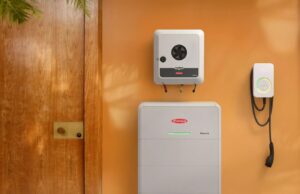
A battery does not make more solar. It moves surplus from the middle of the day into the evening and night, and — if we design it that way — can support selected circuits during an outage.
Storage tends to earn its keep when you export a lot after the house’s daytime needs are met, when a large share of consumption sits after sunset, or when you have a defined backup brief rather than a vague wish for “the power to stay on.” It is a poor match when there is little surplus to charge it, when almost all use already happens in daylight, or when the real problem is an undersized array.
Eligible batteries can still get around 30% off under the Australian Government Cheaper Home Batteries program. The discount depends on usable capacity, eligibility, STC value and install date. Treat that as a contribution to the design, not the reason to pick a size. If you are weighing rebate against real usage, read our battery sizing checklist as well.
Off-grid properties are a different class of problem: the battery is part of keeping the site running, not an optional extra on a grid import/export meter. That conversation belongs with our off-grid solar work.
Export what you cannot use
Energy you cannot use or store can be exported. The Office of the Tasmanian Economic Regulator sets a minimum feed-in tariff — the floor retailers must pay eligible small-scale solar customers for exports.
From 1 July 2026 to 30 June 2027 that floor is 9.276 cents per kWh. Retailers have to pay at least that. Some pay more: Solstice currently pays 11 cents per kWh. Not every retailer does. Plans still differ on the import side (usage rates and supply charges), so a higher feed-in alone does not make a plan “best.”
Eleven cents is still usually well below what you pay to import. Exporting leftover solar is a useful safety valve. It is rarely a reason, on its own, to oversize the array and skip using or storing it. Self-consumption and well-matched storage usually do more for the bill than chasing a few extra cents on export.
Use, store and export as a mix
Most grid-connected solar homes do all three:
- Use what you can while the sun is up.
- Store surplus that would otherwise export, if a battery is justified by evening load and site constraints.
- Export whatever remains at the feed-in rate that applies to your meter and period.
The mix shifts with season, occupancy and new loads. Adding a heat pump, an EV or a battery changes the other two legs. That is why a whole-home view beats a single-product quote.
A practical order for many Tasmanian homes: confirm the array and switchboard can support what you want next; move flexible loads into solar hours where it is safe; then size storage against leftover evening demand and backup needs, as part of the same design as the solar system. A medical backup requirement, a rural supply constraint, or a car that is never home in daylight can reverse that order.
What to bring to an assessment
A quarterly bill total hides the timing problem. Interval data shows when you import, export and generate. If you cannot get interval data, a current bill plus inverter or app history is the next best thing.
Bring that, plus a note of new or planned loads (EV, heat pump, spa, home business), and anything you already know about roof space, inverter model and the switchboard. We will read the pattern before recommending more solar, storage, an EV charger or efficient hot water — or a combination that fits this house.
Contact Expert Energy Tasmania and bring a recent interval-data export or bill to a whole-home energy assessment.