Last reviewed 6 September 2026
Home charging is where most Hobart EV kilometres actually get filled. The useful choice isn’t “which wallbox looks nicest” — it’s whether you charge in the solar window, overnight, or a mix, and whether the switchboard and incoming supply can take it without drama.
This is practical EVSE advice for Tasmanian homes. We’re not publishing invented tariff rates. Retail offers change; your switchboard and driving pattern don’t care about last month’s comparison site.
Two charging philosophies that both work
Solar-aware (daytime)
If the car is home on weekdays — WFH, school runs that return mid-morning, or a second household vehicle — you can soak rooftop generation into the battery pack. A solar-aware charger (or a charger plus home energy management) trims charge rate to surplus, so you’re not importing just to hit 100% at 2 pm.
That’s the same self-consumption logic as heat pump hot water: use generation on-site first. Pair it with the thinking in our use, store or export guide.
Daytime charging isn’t magic in June. Short, cloudy days mean less surplus. If you need a full pack every winter morning for a long commute, solar-aware alone may not be enough — you’ll still import some energy, and that’s fine. The goal is to take the easy solar first, not to pretend Tasmania is Queensland in January.
A familiar Greater Hobart pattern: one partner works from home three days a week with the car on the driveway; the other commutes. Solar-aware charging on WFH days plus a timed top-up overnight before commute mornings often beats forcing a single philosophy every day of the year.
Overnight
Overnight charging suits commuters who leave early and return after dark. The car sits on the driveway from 6 pm; solar is gone. You charge to be ready at 7 am. Some households use a controlled-load or off-peak style arrangement where one exists and still fits the vehicle; others just charge on the general supply because that’s what the meter and retailer actually allow.
We don’t invent a cents-per-kWh overnight rate here. Ask your retailer what’s on your contract, then decide whether a timer, a smarter EVSE, or a home battery discharge into the car is worth the extra hardware.
Overnight charging is not “wrong” just because solar exists. For many Hobart commuters it’s the only pattern that matches the car’s schedule. The design job is to make overnight charging safe on the board and to catch solar on the weekends or WFH days when the car is actually home.
Switchboard and load — the unglamorous bit that matters
A 7 kW single-phase charger is a serious continuous load. Many older Hobart homes have crowded boards, mixed earthing, and limited spare capacity once you add an induction cooktop, heat pump, and solar inverter. Three-phase homes have more headroom but still need balance and protection designed properly.
On a site assessment we look at:
- Main switch rating and incoming service
- Existing solar inverter and any battery
- Diversity — you don’t necessarily run oven, hot water, and a 7 kW charger at full tilt together, but we design as if someone will try
- Cable run to the car space (distance and routing drive cost more than people expect)
- Whether load management (solar surplus mode, or a house-level current limiter) is safer than a dumb full-rate install
Sometimes the right answer is a slightly lower charge rate that the board can live with. Filling overnight at a moderate rate still covers most daily driving.
Terrace and older weatherboard streets around Hobart often hide the expensive bit in the cable route: sandstone, tight eaves, or a meter at the wrong end of the house. Factor that into the decision before you buy the wallbox online.
Where home batteries fit
A home battery can cover evening house loads and, in some setups, trickle the car. Using a 10–13 kWh house battery to fill a 60 kWh car every night is the wrong mental model — you’ll empty the house battery and still need the grid. Better pattern: solar → car during the day when the car is home; battery → house after dark; overnight grid charge for the leftover commute miles.
If you’re adding solar at the same time, design the pair. See solar panels in Tasmania alongside EVSE rather than bolting a charger on as an afterthought.
V2G: emerging, not a sales closer
Vehicle-to-grid and vehicle-to-home get a lot of airtime. In Australia, V2G is still emerging and, in practice, often trial-gated: specific vehicles, inverters, and network/retailer arrangements. We won’t oversell it as a standard Hobart install in 2026.
If you have a vehicle and charger combination that can do V2H/V2G and you want to explore it, we’ll say what’s actually available and what isn’t. For most households the reliable win is still: safe AC charging, sensible rate, solar-aware when the car is home.
Workplace charging and the home brief
Some Hobart drivers charge at work and only top up at home. That changes the home EVSE brief: you may want a simpler, lower-rate charger for weekends and occasional nights rather than a maximum-power wallbox. Tell us about workplace access on the assessment so we don’t overspecify hardware for kilometres you already cover elsewhere.
Apartment and strata sites add another layer — body corporate rules, shared boards, and metering. Those jobs need early paperwork, not just a favourite charger brand. Bring any strata electrical constraints to the first conversation.
How we specify a charger
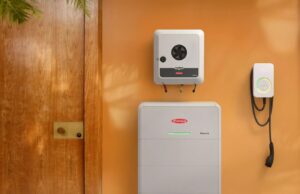
Our EV charger installation in Hobart work is electrical first: protection, isolation, labelling, and a charge point that matches how you park. Brand theatres come second. We’ll ask about typical daily kilometres, whether the car is home mid-afternoon, and whether solar or a battery is already on site (or planned).
If a Powerwall or other storage is in the mix and you’ve seen recall noise online, keep that conversation factual — our Powerwall 2 recall update is the place for that product-specific note, not this EV piece.
Cold mornings add another wrinkle: preconditioning the cabin while still plugged in can draw power before you leave. That is useful comfort — and another reason overnight or managed charging needs a board that can handle overlapping house loads. Factor preconditioning into daily kilowatt-hours when you describe your commute.
A simple decision path
- Is the car home during solar hours most weekdays? Lean solar-aware.
- Is it a classic commute car? Plan overnight (or workplace) charging and treat solar as a bonus on weekends.
- Is the switchboard tight? Fix capacity or use managed charging before buying the biggest wallbox.
- Want V2G? We’ll tell you if your combination is real-world ready — no brochure leap.
What to ask us on a charger + solar assessment
- What charge rate can my incoming supply and board support safely?
- Should we use solar-surplus mode, a timer, or both for my driving pattern?
- If I add a house battery, how should it prioritise evening house loads vs the car?
- Is anything in my vehicle/EVSE combination actually V2G-ready today, or is that future talk?
Author: Scott Logie · Brand: Expert Energy Tasmania · Last reviewed: 6 September 2026
Book a charger + solar assessment. Contact Expert Energy Tasmania and we’ll match EVSE, switchboard, and rooftop generation to how you actually drive around Hobart — without invented tariff rates or V2G hype.