For a grid-connected home, start with kilowatts, not a magic panel count. Panel wattage changes every year. A “10 panel” answer from five years ago is not the same system today. We size to your electricity use, roof, and how much daytime power you can actually use — then we turn that into a panel count on the quote.
Direct answer
Most Tasmanian grid homes land in a band, not a single number. Light users on a small roof might sit around entry residential sizes. A typical family home often sits in a mid residential band. Heavier daytime use, heat pumps, or a home business push you higher — still inside what the roof, switchboard, and network connection allow.
We will not invent a universal “you need X panels” for every Hobart street. On site we convert your target kW into the current panel model’s count.
A rule of thumb we already publish
On our FAQs we use this starting point: about 1.1 kW of solar for every $100 of your quarterly electricity bill, and that usually lands within about 10% of what you need once we check the site. Treat it as a first pass, not the final design. Bills hide timing. Interval data is better when you can get it.
Source: FAQs.
Think in kW bands, then count panels
| Rough grid-home band | When it often fits | Notes |
|---|---|---|
| About 3–5 kW | Lower use, small roof, or a careful first step | Panel count depends on current module watts |
| About 6–8 kW | Common family homes with decent daytime use | Still check export limits and self-use |
| About 8–13 kW (single-phase context) | Higher use, heat pumps, home office, or filling a good roof | Network and board limits matter; see our FAQs note on larger single-phase designs |
These bands are orientation for a conversation. They are not a price list and not a promise that your house sits in the middle of a band.
What actually decides the size
- How much power you use, and when — Evening-heavy homes need a different mix of solar, load shifting, and sometimes a battery than homes that run hard in daylight.
- Roof area, orientation, and shade — North-facing is generally strongest in Tasmania. East/west and partial shade change yield.
- Switchboard and mains — Old boards, missing RCDs, or tight capacity can cap what you can add safely. Assess early: Electricians Hobart.
- Export and connection — TasNetworks rules and your retailer’s metering still apply.
- What you plan next — EV charger, heat pump, or battery should be in the same design conversation so you do not undersize the inverter or the board.
Grid home vs off-grid
This page is for grid-connected houses that still have a retailer meter. Off-grid sizing is a different problem (generation, storage, and backup for the whole site). Use our off-grid work and case studies for that path, not this guide.
Panels, inverter, and “how many”
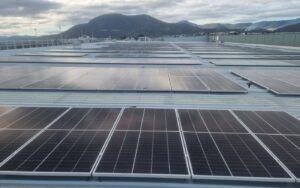
Once the kW target is set, panel count = system size ÷ the wattage of the panel on the quote. A 6.6 kW system might be 12 panels at one wattage and a different count at another. That is why “how many panels” without a kW target is the wrong first question.
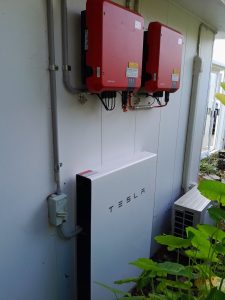
Inverter choice and whether you plan a battery later also affect the design. For storage timing and self-use, see Use, store or export and Is a home battery worth it in Tasmania?.
Who this is for
Grid homeowners in Hobart and statewide who want a clear sizing approach before they compare quotes.
Who this is not for
Anyone who wants a panel count over the phone with no bill or roof info, or an unaccredited “special” that skips the board.
Next step
Send a recent quarterly bill (or interval data) and a quick note on roof and planned loads. We will propose a kW size, then a panel count on current hardware, with STCs shown on the quote.
Contact: (03) 6108 1328 · admin@expertelectricaltas.com.au · Derwent Park, Hobart
Related: Solar panels Tasmania · Solar payback in Tasmania · Is it worth getting solar panels in Tasmania?